

- Hypermobility and Early Development: Milestones, Motor Delay, and Predictions - 12 September 2026
- Fibromyalgia and Itching: Why It Happens, What the Science Actually Says, and What You Can Do About It - 9 September 2026
- Hypermobility in Children: Growing Pains, the Beighton Score, and What Actually Helps - 15 August 2026
This article is part of our comprehensive guide to hypermobility and Ehlers-Danlos syndrome.
A rib going out of place is one of the more memorable things hypermobility does to a person, and if it’s happened to you then you already know the shape of it, as it tends to arrive with no warning at all, usually while you’re doing something completely unremarkable like reaching behind you in the car, and it takes your breath with it on the way past. The honest read, before any of the mechanism: recurrent rib subluxations are recognised in the Ehlers-Danlos syndromes and they sit in the reviews of what these conditions actually do to the chest wall, alongside scoliosis and pectus deformities, but the evidence underneath them is thin, being mostly individual reports and small groups rather than anything you could reasonably call a proper study [1].
Subluxations and dislocations in general are common in hEDS, they can happen spontaneously or after almost no force at all, and they hurt a great deal at the time [2]. That part is well established and nobody serious argues with it. What isn’t established is anything rib specific, as nobody has run a trial on how to assess a slipping rib in hypermobility, and nobody has run one on how to stop it happening again (surprise, surprise).
The closest thing to directly studied rib instability is slipping rib syndrome, where the lower false ribs move more than they should at the front, slip past each other, and irritate the nerve running underneath [3][4]. It isn’t the same condition though, and it wasn’t described in a hypermobile population, so it’s a reason to suspect things rather than a reason to believe them.
What Is Actually Going On When a Rib Slips
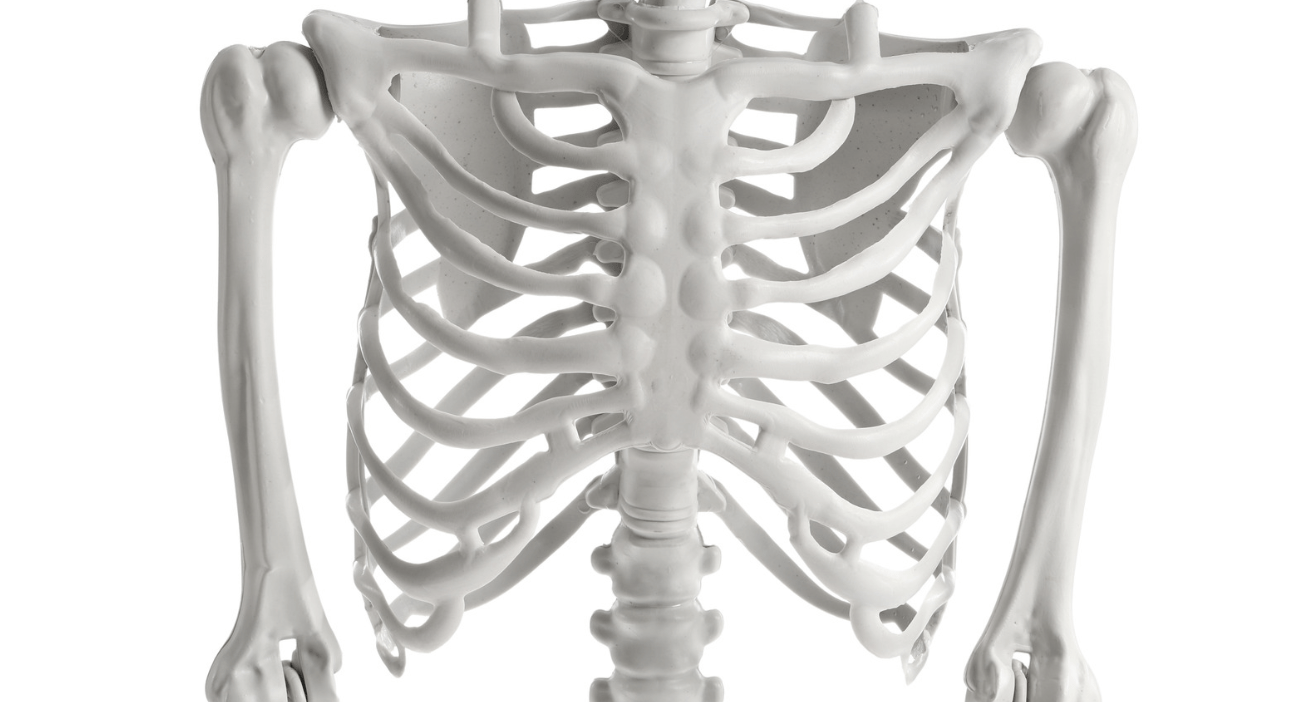
Ribs don’t hang off the spine, they articulate with it, at two joints each, one where the head of the rib meets the vertebral body and one where it meets the bony wing sticking out behind. At the front, the top seven attach to the breastbone through cartilage, the next three attach to the cartilage above them rather than to the breastbone itself, and the bottom two don’t attach at the front at all.
That front end arrangement is where most of the trouble seems to live. The rib cage and the thoracic spine don’t behave as two separate structures, they behave as one mechanical unit, and the rib attachments turn out to be a meaningful part of how stiff and how stable the whole thing is, particularly in rotation and side bending [5]. Most of what’s known about how much each joint contributes though, comes from tissue in a laboratory and from computer modelling, and some of it has only ever been shown in animals, with nobody testing whether it holds in people [6][7][8]. So that’s a reason to suspect the rib joints matter here, rather than proof that they do.
In slipping rib syndrome, the cartilage at the front of the lower false ribs is more mobile than it ought to be, the rib tip travels under its neighbour, and the intercostal nerve gets irritated as it passes along the underside [3][4].
That nerve irritation is the bit that produces the sharp, electric, stop you dead sensation, rather than the movement on its own.
Among sportspeople with it, symptoms were usually on one side only, the tenth rib was the usual culprit, a minority were hypermobile, and it had typically taken more than a year for anyone to put a name to it [9]. That last part is the one worth sitting with though, as more than a year of being told your chest pain is anxiety or a pulled muscle does things to a person that have absolutely nothing to do with the rib.
It refers as well, which is a large part of why it gets missed. Lower rib pain can present as upper abdominal pain, and it can be chased around for years as a gut problem, before anybody thinks to put a hand under the rib margin and pull [10].
Why Hypermobility Puts the Ribs in the Firing Line
In hEDS, instability isn’t confined to the joints everyone thinks of. It can turn up in any joint, and it brings subluxations, dislocations, sprains, soft tissue lesions, muscle tension and persistent pain along with it [11]. There’s nothing about the rib joints that exempts them from any of that.
So, the account people reach for is straightforward enough. More compliant tissue at the front of the rib cage, joints that lean on that tissue for a decent chunk of their stability, and a structure that has to move several thousand times a day whether you like it or not. It’s a plausible story, and in our opinion it’s the most sensible one available, but it hasn’t actually been demonstrated, as recurrent rib subluxation in hypermobility has been described rather than measured [1].
The description being thin doesn’t make the experience thin, by the way. A rib that slips, is doing something mechanical to a nerve, and the reason nobody has measured it properly is that almost nobody has looked, rather than that it turned out to be nothing when they did.

Guarding, and What Happens After a Rib Goes
After a rib goes, most people stop moving their trunk properly. Not deliberately, and not because anybody told them to, but because the thing that hurt most recently was rotating to reach the back seat, so rotating to reach the back seat is now off the menu. Fear of movement and pain avoidant behaviour are both well described in hypermobility and hEDS, and they’re what a nervous system does after something sharp and unpredictable happens twice [12].
Fear of movement is the dominant feature in a lot of those with hypermobility, and it lines up with fatigue rather than with how intense the pain is, which honestly isn’t what most people would guess [13]. In larger groups, catastrophising, anxiety and fear of falling each added to how disabled somebody was, over and above what their pain severity alone accounted for [14]. So two people with the same rib and the same pain, can end up living very differently, and the difference comes down to how much the nervous system has decided movement is a threat.
There’s a proposed pathway for how this builds in hypermobile adolescents, where repeated pain and a genuine vulnerability to injury feed pain related fear, which feeds disability, which feeds more avoidance [15]. It’s a proposal rather than a proven loop, but it does fit what we see in the studios pretty much every week.
Outside hypermobility entirely, in chronic pain more broadly, higher fear of movement goes along with more pain and more disability, and it predicts disability further down the line [16]. And in people with joint problems generally, fear and catastrophising coincide with more protective and more restricted movement patterns, particularly early on [17]. Neither of those is rib specific and neither is about hypermobility though, so they’re supporting evidence rather than the main event.
Now, all of this is modifiable. Combining physical work with cognitive behavioural elements reduced fear of movement in women with hypermobility and improved what they could do day to day, along with their strength, and it did that while changing the pain itself a great deal less [18]. Structured rehabilitation programmes in hEDS have improved fear of movement, fatigue and exercise capacity, and those improvements have held up at follow up [19][20]. Small groups, and none of it rib specific, but it’s the most consistent thread running through any of this.
Breathing, and Why It Gets Complicated Here
Breathing symptoms are common in the Ehlers-Danlos syndromes, and they cover a fair range: breathlessness, difficulty taking a deep breath in, pain in the chest on inhaling, reduced respiratory muscle function and limited exercise tolerance [1][21]. If your ribs are unreliable, several of those will already be familiar without anybody needing to explain them to you.
These symptoms often aren’t explained by standard lung testing, which is the genuinely interesting part. The lungs come back fine and the person still can’t breathe properly, and the whole thing usually gets filed under anxiety. Impaired sensing of lung volume and altered control of breathing have both been raised as contributors in hEDS, which is a very different explanation, and a much more respectful one [22][23]. Under exercise, about half of a small group of those with hEDS showed air getting trapped and airflow limited on the way out, which would make exertion feel considerably worse than the lung function numbers suggest it ought to [24].
The ribs themselves do move with every breath, including the quiet ones. Measured in living people, the joints where each rib meets the spine, travel about a millimetre during ordinary respiration, in three planes at once rather than in a simple hinge [25]. That’s only been looked at in a small way, so treat the exact figure loosely, but the direction of it isn’t controversial.
Ribs move constantly, whether you’re thinking about them or not.
Efficient breathing needs the diaphragm, the abdominal muscles and the rib cage muscles working together, and a chest dominant pattern, or the chest and abdomen moving out of step with each other, are both recognised as dysfunctional patterns [26]. That’s the honest basis for the breathing advice you see everywhere for slipping ribs. What doesn’t exist, at all, is a trial showing that teaching somebody to breathe differently reduces how often their ribs sublux. The mechanism is reasonable enough, the outcome has just never been tested.
The Shoulder Blades and the Rib Cage
Now, this one gets left out of almost every rib article going, and it really shouldn’t. The scapula doesn’t have a joint with the skeleton at the back, it sits on the rib cage and slides around on it, so anything that changes how it moves, changes what gets loaded across the back and side of the chest wall [27].
In women with hypermobility and multidirectional shoulder instability, the scapula rotated upwards less and tilted backwards less as the arm came up, while several of the muscles around it, including infraspinatus, middle trapezius and posterior deltoid, were working harder than in comparison groups [28]. So, less movement at the shoulder blade, more effort from the muscles trying to hold it, and all of that happening directly against the ribs.
Whether that contributes to a rib slipping isn’t known though, as nobody has connected the two directly in hypermobility [27]. It’s a sensible place to look, and it’s one of the reasons shoulder blade work turns up in rib rehabilitation at all, but the link is currently an inference rather than a finding.
Costochondritis, Tietze, and the Chest Wall Confusion
Costochondritis means tenderness you can reproduce by pressing at the joints where rib cartilage meets the breastbone, usually with no swelling, usually at more than one level, and it typically gets worse with a deep breath or a cough [29]. That description covers a great deal of what those with hypermobility get told they have.
Tietze syndrome is the swollen version, at a single joint, usually the second or third one down [30]. The two get used interchangeably by clinicians who really should know better, which matters mainly because being told the wrong one makes it considerably harder to find anything useful when you go and search for it later.
Costochondritis is listed among the inflammatory findings reported in the Ehlers-Danlos syndromes [1]. So there’s a recognised association, which is still a long way from showing that a slipping rib causes costochondritis in hypermobility, and nobody has shown that.
How easily these things impersonate each other is better supported. Slipping rib syndrome, costochondritis, Tietze syndrome, dysfunction at the joints between rib and breastbone, and a simple intercostal strain can all look clinically similar [29][31]. Mechanical dysfunction at the fifth sternocostal joint has been described once, in somebody with focal tenderness, reduced rib movement on breathing in and out, and swelling that showed up on ultrasound, who then improved with rib cage and thoracic mobilisation, diaphragm work, postural retraining and shoulder blade stabilisation [31]. Described once, and not in hypermobility, so that’s one person getting better rather than evidence that this is the mechanism.
A plausible bridge between the two, and it really is only plausible, is straightforward mechanical irritation, as the slipping rib picture already involves overly mobile cartilage and a nerve getting caught at the lower rib cage [4][32].
Scoliosis and the Shape of the Rib Cage
Scoliosis changes the shape of the thorax and the angle every rib sits at, so it belongs in any honest conversation about rib pain. It gets listed in the Ehlers-Danlos reviews alongside recurrent rib subluxations, as a structural finding that can interfere with how the chest works mechanically [1][33].
Roughly a third of hypermobile adults who’ve been measured had scoliosis, and the curves were mild to moderate, with none of them severe enough to need surgery [34]. Take that as a rough figure rather than a settled one though, as it’s a small group and adults only.
Across the Ehlers-Danlos syndromes as a whole, spinal curvature varies a lot by subtype, and it’s most notable in the kyphoscoliotic and spondylodysplastic types rather than being uniform across the board [33]. In the wider hypermobility literature the picture is genuinely contested. One line of evidence finds no convincing population level support for isolated musculoskeletal hypermobility causing adolescent idiopathic scoliosis, while a very large look at adolescents did report an association between hypermobility and spinal deformity [35][36]. Researchers genuinely disagree about this one.
The mechanical link between rib position and spinal behaviour is on much firmer ground. The rib cage contributes materially to thoracic stiffness, and releasing the rib head changes how the thoracic spine moves [5][37]. So a spine with a curve in it, is a spine whose ribs are sitting at different angles and being loaded differently, which isn’t a controversial claim at all, just an under studied one in this population.
What Actually Helps
The evidence thins out again at this point, so keep your expectations calibrated. There are no hypermobility specific protocols for an acute rib subluxation, and the closest thing available is the slipping rib literature and general hEDS management.
For an acute episode, conservative management comes first, which usually means relative rest, symptom directed anti inflammatory care, and physical therapy, with nerve blocks or surgery held back for the cases that genuinely won’t settle [4][32][29]. Diagnosis is mostly clinical, using the hooking manoeuvre, where a hand goes under the rib margin and pulls forward to reproduce the click and the pain (which is about as pleasant as it sounds), and dynamic ultrasound can help in the difficult ones [3][4][32].
For the longer term, the best supported message is about motor function rather than about ribs. Therapeutic exercise and motor function training come out as the most efficacious approaches in generalised hypermobility spectrum disorder and hEDS, with weaker evidence behind adaptive equipment, instruction alone, manual therapy and functional training [38]. Exercise and rehabilitation may improve both physical and psychological outcomes in the Ehlers-Danlos syndromes, though the evidence base is small and the studies aren’t very alike, so treat that as a reasonable expectation rather than a promise [39].
What that looks like in practice, in a programme built specifically for this population, is a fairly specific list [40].
– Costal and diaphragmatic breathing re-education: Retraining how the lower rib cage and the diaphragm share the work of a breath, rather than letting the upper chest do most of it. This is the piece most often sold as the whole answer, when it’s really one part of it.
– Upper abdominal activation: Used where the ribs flare outwards or the mid back sits in too much extension, which is a common shape in those with hypermobility and one that leaves the front of the rib cage hanging open.
– Thoracolumbar control and posture awareness: Work on the junction between the chest and the low back, and on knowing where you’re sitting in space, rather than holding a position because somebody once told you to.
– Scapular stabiliser activation with cueing: Shoulder blade work, with touch and verbal cues, which is exactly what you’d expect, given how the scapula loads the rib cage.
Alongside that, core and trunk stabilisation, posture re-education, joint awareness and biofeedback all get emphasised in hEDS reviews as ways of improving proprioception and reducing the problems that come with instability [11]. Which is the order we’d put them in as well: improve the quality of the information the brain is getting, then improve what it does with it, and only then start piling on load.
Breathing muscle training has some support behind it, with inspiratory muscle training improving functional exercise capacity in hEDS, and it’s being formally tested alongside standard rehabilitation because breathlessness and respiratory muscle weakness are recognised problems here [41][42]. Outside hypermobility, adding breathing exercises to shoulder blade stabilisation training improved things in a young population with a forward rounded posture pattern, which is an indirect model rather than evidence in hEDS [43].
Now, taping gets asked about constantly, so it’s worth being straight about. Manipulative treatment was one of the more successful reported approaches in slipping rib syndrome among athletes, but that’s a look back through records rather than anything comparative, so it can’t tell you it works better than the alternatives [9]. Kinesiotaping reduces pain in the first days to weeks after isolated rib fractures [44]. A fracture isn’t an unstable rib joint though, so that’s a reason to think taping might take the edge off, rather than evidence that it does anything for a subluxation.
One more practical thing though. Those with hypermobility report that physical therapy tailored to Ehlers-Danlos feels more helpful for posture than standard physical therapy does, which is worth knowing if you’re choosing who to see, though that comes from asking people rather than from comparing the two properly [45]. And conservative care is generally the right first call, as complication rates for joint and spine surgery are high in this population, and multidisciplinary conservative pain management, weak as its evidence base is, remains the main non surgical path available [45][46].
What Nobody Knows Yet
The gap here isn’t subtle. There are no prospective studies on how to assess a rib specifically in hypermobility, none on how to rehabilitate one, and none establishing that any of the things routinely recommended actually reduce how often ribs slip. All of it rests on adjacent evidence: the general instability picture in hEDS, the slipping rib literature in people who mostly weren’t hypermobile, biomechanics worked out in laboratories, fear of movement research that wasn’t about ribs, and rehabilitation trials that improved general function without anybody counting subluxations.
None of which means do nothing. Anybody selling you a rib protocol with real confidence is ahead of the evidence, so judge what you try by whether your trunk is moving more freely and whether you’re dreading reaching behind you less, rather than by whether the programme says it has solved the problem.
The Fibro Guy